


When to Take Newborn Photos | Best Timing for Newborn Photography

One of the most common questions I hear is when to take newborn photos, and whether that window has already passed.
Many families asking this are also in the process of choosing a Denver newborn photographer who can guide them through what timing will look like for their baby and their recovery.
And as a mom of five, I understand that question in a very real way — because no two babies, or postpartum experiences, ever unfold the same.
Some of my own babies were photographed right away. Others, life looked different. Recovery looked different. Timing looked different. Over the years, I’ve also worked with babies who arrived early, babies who spent time in the NICU, and babies who came right on time or even past their due date. Every one of those experiences looks a little different, and that’s something I take into account with every session.
Newborn photography in Denver is often planned around this early window, but there is more flexibility than many families expect.
If you’re exploring how a full studio session feels, you can also read more about newborn photos in Denver and what to expect.
The Ideal Time for Newborn Photos
Newborn sessions are typically scheduled within the first 1–3 weeks after birth.

This is often considered the best time for newborn photos, as babies are still naturally sleepy and settle easily into those soft, curled positions.
During this time, most babies are naturally sleepier and still settle easily into those curled, womb-like positions. This is what many parents picture when they think of newborn photography — soft, peaceful, and gently posed.
This window allows for a smooth, unhurried photo session where your baby can be comfortably guided without disruption, especially in a studio environment where everything is designed around their comfort.
How Newborn Sessions Are Timed Around Your Baby
One of the most important things to understand is that newborn sessions are not scheduled like typical appointments.
Rather than choosing a fixed date far in advance, your session is planned around your baby’s arrival. Your due date is reserved on the calendar, and once your baby is here, your session is scheduled within that ideal window.
This flexibility is what allows your experience to feel calm and supported, rather than rushed or forced into a timeline that doesn’t fit your baby.
For a more detailed look at timing, preparation, and how everything flows, you can read more about what to expect during a newborn session.
How Your Baby’s Birth Timing Can Affect Your Session
Every baby is different, and their temperament often reflects how and when they arrived.
Babies who arrive a few weeks early are often still very sleepy around their adjusted age, which can actually work beautifully for a newborn session. On the other hand, babies who are born right on their due date or a bit later tend to become more alert a little sooner, which may change the pace and flow of the session.
There are also natural factors, like higher bilirubin levels in those early days, that can make some babies extra sleepy. Others are simply more observant from the start.
None of this is something you need to worry about — it simply helps guide how your session is approached so that it feels natural and supportive for your baby.
Is 3 Weeks Too Old for Newborn Photos
Not at all.
Three weeks is still very much within the ideal window for a newborn, though you may start to notice small shifts. Some babies are a bit more alert, a bit more stretched out, and may need a little extra time to settle.
This doesn’t take away from your session. It simply means we follow your baby’s lead more closely and allow the experience to unfold in a way that feels comfortable for them.
Can You Take Newborn Photos at 1 Month
Yes, absolutely.
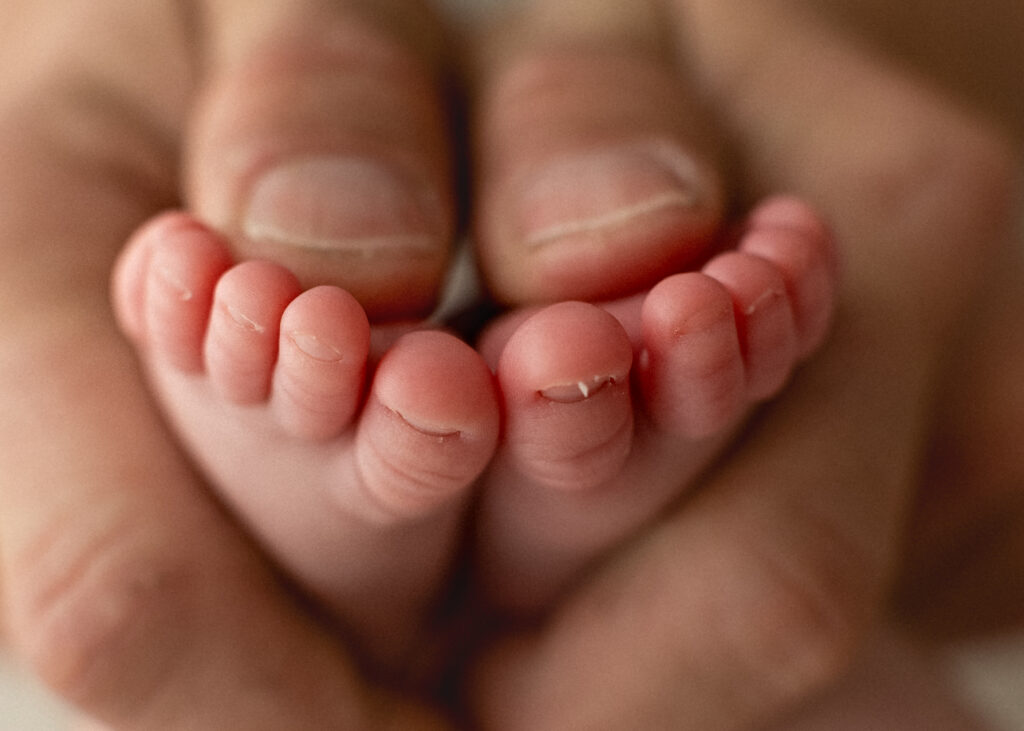
At one month, your baby is often more awake and expressive. While you may not see as many of the very curled, sleepy poses, this stage brings a different kind of beauty — more eye contact, more movement, and more interaction.
These sessions often focus more on connection and natural moments rather than fully posed images.
What If You Miss the Newborn Window Completely
This is something many parents quietly worry about.
If your baby is already past that early newborn stage, it does not mean you missed your chance for meaningful images.
Sessions with older babies often shift in a beautiful way. Rather than focusing on curled, sleepy poses, the images begin to reflect more connection, interaction, and personality. Your baby may be more alert, more expressive, and more engaged with you.
These sessions tend to feel a bit more like early milestone photography, while still holding onto the softness of those first months.
There is no “cutoff” where it becomes too late — only a shift in how your story is documented.
A Note on Different Newborn Photography Styles
Knowing when to take newborn photos is crucial because the timing of your session also plays a role in the style of images we can safely create.
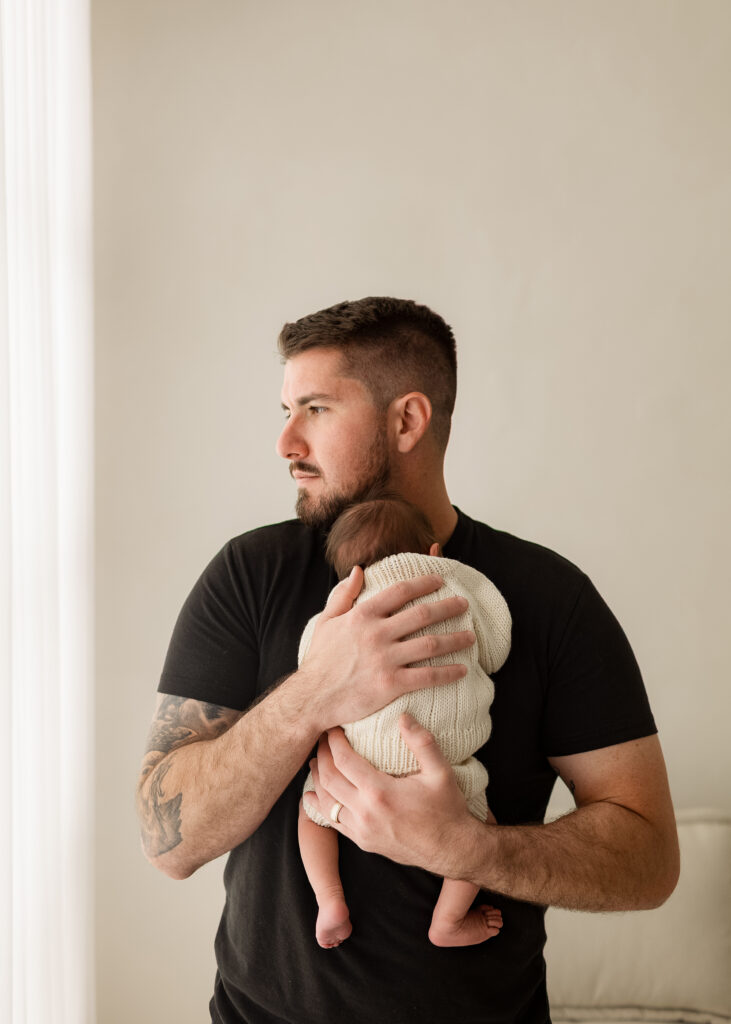
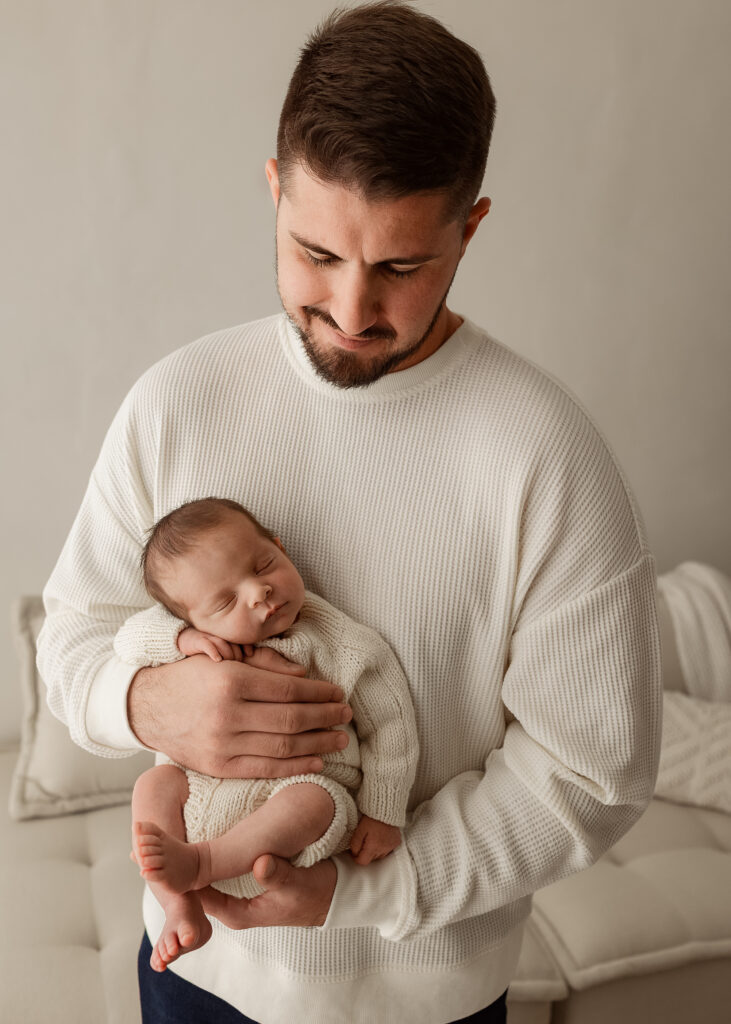
More styled, posed newborn sessions rely on a baby being in a deeper, settled sleep not only for the look of the images, but for safety. Gentle positioning always prioritizes your baby’s comfort and natural flexibility, and a sleepy, relaxed state allows this to be done safely and without stress.
If a baby is more alert, we simply shift the session in a direction that better suits them rather than trying to force poses that don’t feel natural.
A more natural, baby-led session allows for greater flexibility. These sessions focus on your baby just as they are — whether they’re sleeping in your arms, gently held, or resting comfortably without the need for structured posing.
Both approaches are beautiful, but the timing of your session helps determine which direction your images naturally lean.
A Note for NICU and Later Arrivals
Sometimes this season doesn’t follow the timeline you expected.
I’ve worked with many families whose babies spent time in the NICU, and I understand that bringing your baby home may come later than planned. In these cases, newborn sessions often take place outside of that typical early window.
Babies who have spent time in the NICU can sometimes be a bit more sensitive or less settled, which simply means we move more gently and allow more time. The session is always adapted to what feels best for your baby.
The goal is never to force a moment, but to create something that feels calm, safe, and true to your experience.
When to Book Your Newborn Photographer
Because of how small that early window can be, most families choose to reserve their session with a Denver newborn photographer during the second or early third trimester.
Booking early ensures you have access to a Denver newborn photographer whose style and approach align with what you’re hoping for.
Your due date is held on the calendar, allowing flexibility once your baby arrives. This ensures everything is already in place, so you can focus on your baby instead of trying to plan photos during those first few days at home.
For many families in Denver, planning ahead helps create a much smoother and more supported experience.
In recent years, I’ve noticed more families waiting until after their baby arrives to begin looking for a photographer, which is completely understandable. Those first days can feel like a lot to navigate, and it’s natural to want to wait and see how everything unfolds.
That said, because newborn sessions are limited each month and scheduled around due dates, availability is not always guaranteed by the time you begin reaching out. Planning ahead simply allows for a smoother, more supported experience, rather than trying to fit something in during an already full season.
If you’re searching for a newborn photographer after your baby has already arrived, you’re always welcome to reach out. Sometimes there is still availability.
Planning Your Newborn Session
There is no single best time that applies to every baby.
What matters most is creating space for this season to be documented in a way that feels calm, supported, and aligned with your baby.
Whether your session happens within those first few weeks or a little later, the focus remains the same — capturing your baby with intention, care, and a style that will continue to feel timeless as the years pass.
If you’re in the process of choosing a Denver newborn photographer and want a closer look at what the experience includes, you can explore more about newborn photography sessions here.
If you’re ready to start planning your session, send me a message here.

Featured Posts
READ THE BLOG
Studio vs Outdoor Maternity Photography in Denver & Northern Colorado
READ THE BLOG
Rocky Mountain National Park Maternity Photos
READ THE BLOG
best places for maternity photos in denver
